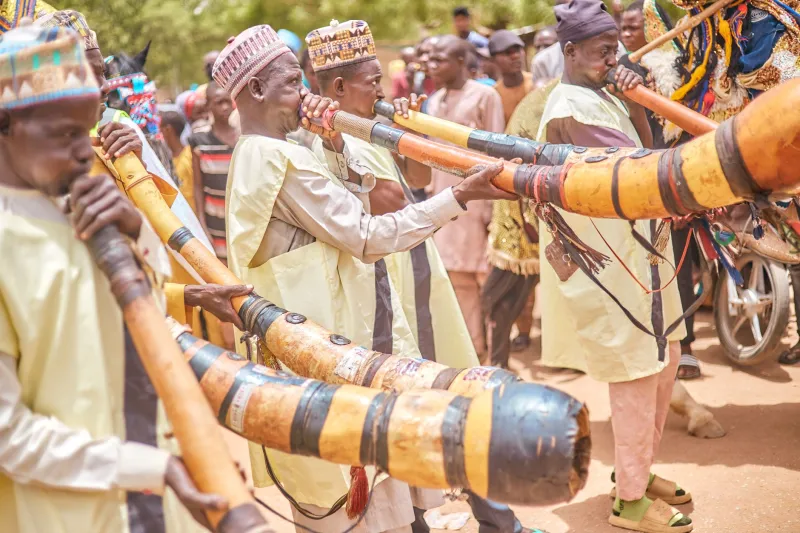
Slow Between the Songs: A Ten-Minute Field Guide to Wakati Wetu's Unlisted Grounds
Ask ten people at Wakati Wetu what the festival is, and nine will describe a stage. Ask the tenth — the one sitting on a cooler by the fence, doing nothing in particular — and you'll get a different answer. They'll tell you about the circle that formed near the water refill station when a djembe player started messing around during a soundcheck. Or the textile vendor who pulled out a stamp block and let a line of strangers print their own tote bags. Or the two families from the same neighborhood in Houston who found each other because one of them was humming the wrong verse.
None of that is on the schedule. All of it happens in the gaps.
This is a field guide to those gaps — specifically the ten minutes between sets, which is roughly how long it takes a crowd to disperse, re-form, and forget what it was going to do next. Treat those ten minutes as programming and the weekend doubles in size.
Rule One: Pick a Landmark, Not a Stage
Stage-hopping is a rookie habit imported from rock festivals, where the walk between fields is dead time. Wakati Wetu isn't laid out that way. The grounds are compact enough that you can hear three things at once, which means the best move is to choose a fixed point — a tree, the flagpole, the bench near the instrument tent — and let the festival rotate past you.
Practical version: pick two landmarks for the day, one near the main stage and one on the outer edge. Post up at the outer one for at least one full ten-minute window. You will feel like you're missing something. You are. That's the trade.
Rule Two: The Dance Circle Forms Before the Soundcheck Ends
Watch the perimeter when a set is breaking down. Within about four minutes of the last song, someone with a speaker or a hand drum starts a rhythm near the edge of the crowd, and within six, there's a ring around them. It is almost never announced and almost never amplified.
If you're coming from a US festival background, think New Orleans second line energy rather than main-stage spectacle: no barrier, no sightlines, just a loose ring that expands as people join. Two things to know. First, the ring has a direction — watch which way people are moving before you step in. Second, the outer layer of the circle is for watching, the inner layer is for dancing, and nobody minds if you stay in the outer layer all night.
Rule Three: Drum Huddles Are Open, But Read the Room
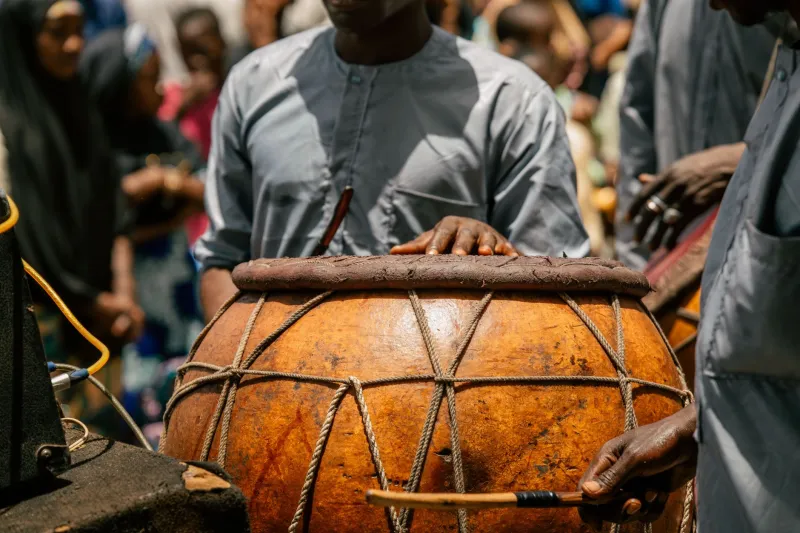
The informal percussion gatherings that pop up near the vendor row and the shaded areas are the closest thing this festival has to a jam session. They're welcoming by design. They also have a rhythm and a tempo already going, and the quickest way to get a polite nod and no eye contact is to walk in swinging.
Stand at the edge, clap the pulse for a minute, then ask. Literally ask — a hand gesture and a raised eyebrow does the job. If someone hands you a shaker, you've been invited. If nobody does, you've been given a gift anyway: ten minutes of something you will not hear on any stage this weekend.
Rule Four: The Vendor Tents Are Classrooms in Disguise
The craft and instrument vendors at Wakati Wetu don't just sell. They demo. A kora player will show you how the strings are lifted onto the bridge. A printer will pull a fresh cloth and explain the meaning of a symbol. A drum maker will let you feel the difference between a machine-tightened skin and a hand-laced one.
These demos happen when traffic is slow — which is to say, during the ten minutes everyone else spends walking. Bring small bills. Ask the question you think is too basic. Vendors have answered it four hundred times and will answer it better for you than any placard could.
Rule Five: The Meetups Are Organized by City, Not by Artist
The diaspora meetups at this festival are the least publicized and most reliable thing on the grounds. Look for hand-written signs, QR codes taped to tables, group photos taken near the entrance arch. Columbus, Atlanta, Minneapolis, the DC metro, Newark, Houston, Seattle — if your city has a community, someone has claimed a bench.
Go even if you don't need anything. The person next to you may know which Sunday show to catch, which vendor ships to your zip code, or where the after-festival gathering is. This is the part of the weekend that turns a ticket into a network.
Rule Six: Sit Down on Purpose
Every year, someone limps out of the gates on Sunday swearing they'll do it differently. The fix is boring: schedule one ten-minute sit per set change. Actually sit. Phone in pocket. Watch the crowd instead of the stage.
US festival culture rewards motion — we queue, we sprint, we tailgate like the parking lot is the point. Wakati Wetu rewards the opposite. The grounds are built for lingering: shade, benches, water, room to stand still without being moved along.
Rule Seven: Talk to the Person Standing Alone
There is always one. Usually near the edge of a circle, usually holding a drink they've forgotten about, usually waiting to see if it's okay to join. It is. Say something. The unannounced moments at this festival are social by nature — a ten-minute window is long enough to make a friend and short enough that it costs you nothing if you don't.
What You'll Actually Miss
Let's be honest about the trade-off. Skipping a transition walk means missing the opening song of a set you paid to see. Sometimes the drum huddle is just three guys and a bucket. Sometimes the vendor demo is a sales pitch with extra steps.
The ten-minute rule isn't a religion. It's a habit. Try it once on Friday, twice on Saturday, and see whether the weekend feels longer. Most people who stick with it come back the next year with a folding chair and no plan at all — which, around here, is the advanced move.