Pass the Calabas: Why Wakati Wetu Needs a Touch-First Instrument Room
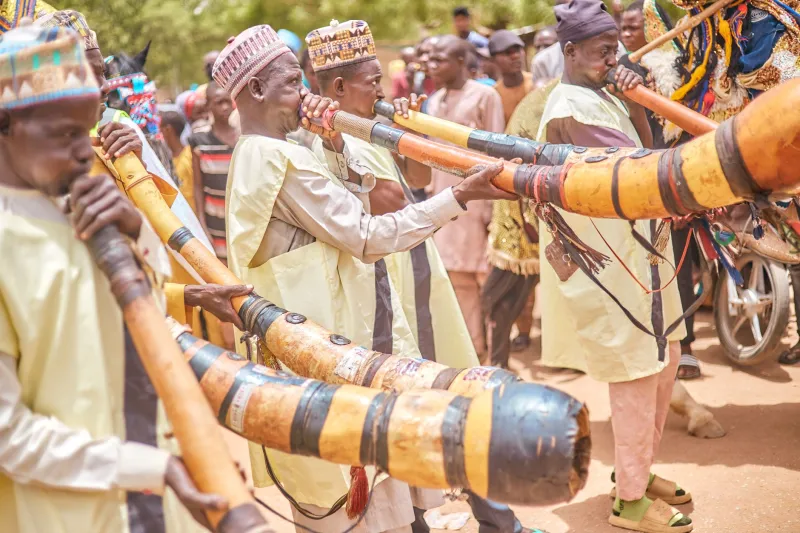
Wakati Wetu 2026 will have stages, food, merch, and the good kind of crowd noise. What it should also have is a room where people can touch the instruments. Not a souvenir stand. Not a petting zoo. A supervised, artist-led pavilion where a festivalgoer can sit with a kora, a djembe, a kalimba, or an mbira for fifteen minutes and learn what the thing actually feels like under the hands.
This is an argument for that room — and for the rules that would make it worth having.
Why Touch Matters
Most U.S. festivalgoers have held a guitar or tapped a drum pad. Far fewer have felt the tension of a kora’s 21 strings or the give of a djembe head under a palm. That gap matters. Musical literacy is not only listening. It is also physical: the reach of the hand, the resistance of the material, the way a resonator pushes sound into a room. A sign can tell you a kora is made from a calabash. Your hands tell you why that sentence is interesting.
Touch also demystifies without diminishing. A djembe is not magic because it is distant. It is remarkable because it is specific: a carved shell, a goat skin, a set of tones that a player organizes into speech-like phrases. When a visitor feels that, the instrument stops being a symbol and becomes a tool. That is a good thing for audiences. It is also a good thing for artists, because informed listeners ask better questions.
For diaspora audiences, the room can be a form of reconnection. For everyone else, it is a first sentence in a longer conversation. Either way, the pavilion should not promise mastery. It should promise contact.
The Risk Is Real
Living traditions are not props. Some instruments carry protocols: who may play them, when they may be played, what songs belong to which occasions. A djembe is not just a drum. A kora has lineage. An mbira can be tied to ceremony. A talking drum can be a language instrument, not a novelty. A festival cannot flatten all of that into a 'try it' booth and call it cultural exchange.
The answer is not to keep everything behind glass. The answer is to let culture bearers set the terms. That means artists and tradition-keepers design the room, not just instrument retailers or festival staff with a spare tent. It means some instruments are demo-only. It means a visitor can be told no. And it means the festival budgets for guidance, not just for equipment.
The Protocol That Makes It Work
A hands-on pavilion can be joyful and careful at the same time. Here is a protocol worth building around.
-
Invite, do not extract. Artists and culture bearers set the rules, the repertoire, and the no-touch list. The festival provides the room and the budget.
-
Ask before every touch. A sign is not consent. A host should hear a verbal yes from the player or guide each time.
-
Clean hands, empty pockets. Sanitizer at the entrance. No rings, no food, no drinks, no keys on the drum head.
-
One instrument, one guide. Small groups. The artist demonstrates first, then the visitor echoes a simple phrase. No free-for-all.
-
Respect the no-touch list. Some instruments stay behind glass or are played only by the culture bearer. That is not a failure of the pavilion. It is the pavilion working.
-
Pay the guides. Budget a real fee for artists, elders, and translators. Do not rely on volunteer labor to carry cultural knowledge.
-
Build in quiet and sensory-friendly slots. Fifteen-minute sessions, low volume, shaded seating, and a clear exit. Accessibility is part of respect.
-
No filming without consent. Ask first. Some songs and rituals are not for the feed.
-
Teach the why. Short placards on materials, history, tuning, and regional differences. The visitor should leave knowing more than how the instrument feels.
-
Close the loop. Hand out sign-up sheets for local lessons, instrument makers, and cultural centers. The festival is a doorway, not the whole house.
What It Looks Like in Practice
Picture a shaded tent with a hand-washing station, low benches, and a few instruments on stands. A kora player from Senegal or Mali demonstrates a phrase, then guides a visitor’s thumbs. A Ghanaian drummer shows the difference between bass, tone, and slap on a djembe. A Zimbabwean mbira player explains why the instrument is held that way and what the metal tines do. A host stands at the entrance, not to police people, but to welcome them and set the frame.
If you have been to a music store in Austin or a drum circle in Chicago, you know the difference between supervised and unsupervised. The supervised version is not less fun. It is more interesting, because someone is teaching you what to listen for. At Wakati Wetu, that someone should be the artist, not a festival intern with a clipboard.
The Cost of Not Doing It
If the festival only lets people watch, it trains audiences to consume. If it lets people touch without protocol, it turns living traditions into a photo op. The middle path is a room with a door, a host, and a budget line. It says: this music is not a museum piece, and it is not a free-for-all. It is a practice, and you are a guest.
Let hands meet strings and skins — on the artists’ terms. That is how a festival becomes a classroom, and how a listener becomes a participant. Wakati Wetu means 'our time.' A touch-first instrument room would make that pronoun do some real work.