The Songs I Heard Through a Wall: Second-Generation Listeners at Wakati Wetu 2026
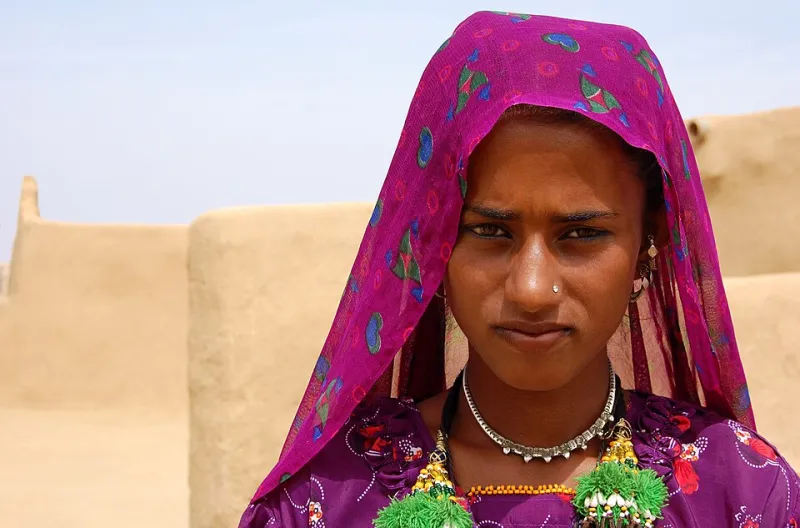
Photo: Paulrudd, CC BY-SA 3.0, via Wikimedia Commons
Renee learned the song before she learned the language. That's how she puts it, standing near the second stage with a paper cup she keeps forgetting to drink from. She's 29, a nurse in Houston, and her parents are from Ibadan. The track playing right now — she knows the chorus the way you know a hallway in your childhood house. She couldn't tell you what the verses mean.
"I used to think it was about a party," she says. "My mom informed me it's about missing someone so much you can't sleep. So. Not a party."
She laughs, and then it's quiet for a second, because this is the part of the weekend that keeps happening: a song she owns and doesn't own at the same time.
The Wall Between the Kitchen and the Living Room
I spent the three days of Wakati Wetu 2026 trailing second-generation listeners — American-born and American-raised people with African parents, and a few with no African family at all who came anyway. It's a specific way of hearing a festival. For people whose parents grew up here, a lineup is a set of names to be researched. For this crowd, half the names are already attached to a memory of a car ride, a wedding, a birthday where a cousin took over the aux cable, an argument between an aunt and an uncle over a volume knob.
The music arrived sideways. Through a wall. From the next room. That's the whole archive.
Three Distances From the Source
Kwame, 34, a DJ in Chicago, has the shortest distance to travel. His father is from Accra, and Kwame's crates already carry the highlife records he grew up hearing on Sunday afternoons. What he came looking for this year was the newer stuff — a live version of a sound he usually meets as a compressed file. "There's a part where you can hear the drum responding to the dancer," he says. "You cannot stream that."
Selam, 26, a grad student in Washington, DC, sits further out. Her family is Ethiopian, and the language in a lot of the music she loves is a list of syllables she has been meaning to ask about since she was eleven. She kept a note on her phone of words she caught and wanted translated later. It got long.
Then there's Jordan, 22, from Minneapolis, who has no African family and had come because a friend's cousin was playing. By Saturday afternoon Jordan had been pulled into three conversations about drum patterns by strangers who assumed a shared background. "I've been honest about being clueless," Jordan says. "Nobody has made it weird yet."
Mishearing as a Form of Study
Here's what surprised me: how often someone would sing along to a full chorus and then admit, cheerfully, that they had invented most of the words.
"I thought the hook said 'leave your shoes at the door,'" Renee says. "It does not say that. My cousin was very clear that it does not say that. But it's what I've been singing since 2011, so it's my family song now."
There's a habit in diaspora households of learning a song's shape and texture before its meaning — the melody is the door, and the language is a room you might get to later. Watching a crowd of people confidently sing a misheard word at full volume is not embarrassing. It's a study method. It's also a very old way of holding on to something across a distance.
What Counts as Claiming
The harder conversations happened off-stage. Between sets, I heard someone describe another attendee as "not really from the community," and I heard the response: that the music has been moving through ports and radio and vinyl and remix culture for a century, and gatekeeping a drum pattern is a losing game that nobody in the ensemble on stage seems interested in winning.
Kwame has a cleaner framing. "There's a difference between claiming and custody," he says. "Claiming is when you act like it's yours. Custody is when you show up with care and credit the people who made it. I try to do the second one."
That distinction held up all weekend. The people who got the most out of Wakati Wetu weren't the ones with the strongest bloodline claim. They were the ones who listened as if something might be required of them — attention, a name remembered, a record bought instead of streamed.
The Playlist You Take Home
By Sunday evening the take-homes had become concrete. Selam had a list of 31 titles to chase down, half of them identified by holding her phone up to the speaker. Jordan had a new favorite and no idea how to pronounce the artist's name, and had asked someone to spell it. Renee had called her mother from the shade of the elders' tent to ask what a specific line meant, and the call had turned, as these calls do, into twenty minutes about an aunt.
"I think I thought I'd come here and feel like I was catching up on something I missed," Renee tells me, near the end. "But I'm not behind. I'm just a different distance away."
Not a Test
The thing that makes Wakati Wetu easy to be a second-generation listener at is that the festival is not grading anyone. There's no quiz at the gate. No one is checking your accent or your grandmother's village. The community music circle runs on a simple instruction — join in without making it about you — and that instruction applies just as well to the person who knows every word and the person who knows none.
I went home and opened the notes app, which is what everyone seems to do. Thirteen titles. Two words to translate. One song I've known since childhood and still have never understood.
I'll ask my mother about it. Maybe this week.