Follow the Dollar: What a Wakati Wetu Ticket Actually Pays For

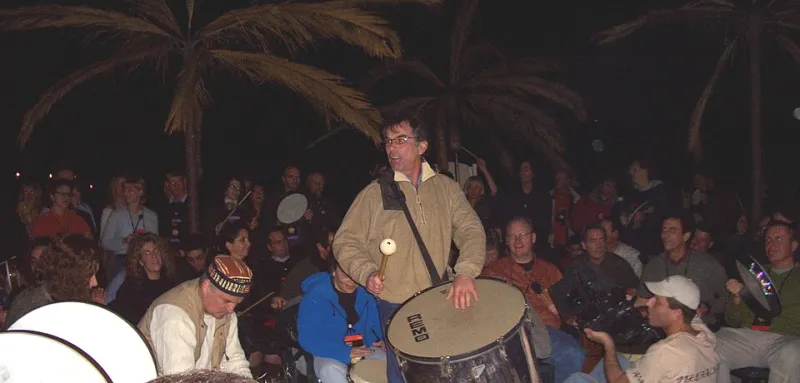
Photo: Martin Kraft, CC BY-SA 4.0, via Wikimedia Commons
A three-day pass to Wakati Wetu costs less than a decent pair of running shoes. That line gets dropped in group chats a lot, usually with an exclamation point, and it's true. It's also the start of a misunderstanding — the one where a ticket price gets treated as the whole story of what a festival costs, rather than the slice of it that a guest happens to hand over at the gate.
So here's the receipt. A caveat first, the kind a finance person would insist on: these are rounded shares pulled from the 2026 planning workbook, not audited statements, and every festival splits its money differently. The point isn't decimal precision. The point is that US festivalgoers are trained to compare one number — face value — and almost never see the rest.
Start With the Number on the Stub
A single-day pass runs $75. The three-day is $185, all-in, with fees folded in where you can see them. Kids under 12 come in free with a guardian. Nobody is charged extra for the accessible viewing platform, the ASL interpreters, the shade structures, or the water refill stations. Those aren't free, though. They're just paid for by everyone instead of by the people who need them, which is a budgeting decision before it's a values decision.
Here's roughly where each dollar of ticket revenue lands in 2026.
Artist Fees and Travel — About 34 Cents
The largest single block, and the one audiences are most likely to guess correctly. It covers performance fees, but also the stuff wrapped around them: flights and ground transport, freight for instruments too fragile for a cargo hold, hotel nights, per diems, work permits and visa appointments, and the odd replacement string set at 11 p.m. A festival that shaves this line to keep prices low isn't being efficient. It's asking musicians to subsidize a night out for everyone else.
Staging, Sound, and Site — About 26 Cents
Risers, roof, delay towers, backline, generators, cable, fencing, the crew who build it in the heat and strike it in the dark. This is the least visible money in the entire operation and the most load-bearing. If you've ever wondered why a festival starts on time, this line item is the answer.
Accessibility and Care — About 9 Cents
Ramps and level paths. Interpreters working in pairs so nobody signs a four-hour set alone. The rest zone. Elders' seating up front. Medical staff on site rather than on call. Cooling stations and potable water. It's under a dime of every dollar, and it's the first thing a nervous budget reaches for when costs creep. Hold that thought.
Community Programming — About 7 Cents
The kids' zone with proper staff ratios. The touch-first instrument room. The open stage slot. The community music circle. None of this sells a ticket on its own, and all of it is the reason a lot of families come back.
The Boring Spine — About 16 Cents
Insurance. Permits. Sanitation. Waste hauling. Water. Radios. Power distribution. Security. Shuttle coordination. This is the money that buys you a festival where nothing dramatic happens, which is exactly what you want to be paying for.
Contingency and Year-Round Work — About 8 Cents
Five cents sits in a reserve for weather, cancellations, and the surprise that always arrives. Three cents covers the year-round labor — the booking calls in February, the visa paperwork in April, the neighborhood meetings in July — that makes three days in September look easy.
Why the Cheap Ticket Is a Loan
Here's the opinionated part. A ticket that's priced below what the festival actually costs isn't cheaper. It's been financed by someone else, and the lender is usually one of four parties: the artists, in lower fees; the volunteers, in unpaid hours; the host neighborhood, in noise and cleanup; or next year, in a reserve that never gets built.
A loan is fine if you know you're taking one and you plan to repay it. What's not fine is calling it a discount.
What We're Trained to Compare
US ticket buyers are fluent in a very specific math: face value plus fees plus parking plus the $18 lukewarm thing in a plastic cup. We compare those totals across festivals like they're apples. They're not. One festival's $185 might include interpreters, free water, and a staffed kids' zone. Another's $145 might quietly assume you can stand for six hours in full sun and pay for every drop of water.
Price is a fact. Value is a reading of the whole ledger. Only one of those fits on a poster.
Three Questions Worth Asking Any Festival
- Who pays for the ramp? If the answer is vague, accessibility is being treated as a nice-to-have.
- What happens at 1 a.m.? Load-out, trash, and transport reveal more about an operation than any lineup graphic.
- Is there a reserve? A festival with no cushion is one bad forecast away from asking its community for a bailout.
What Full-Picture Paying Actually Buys
It buys shorter lines at the gate because staffing wasn't cut. It buys an artist who slept and ate before the set. It buys a parent who can sit down. It buys a volunteer who gets a real meal and a shift that ends. It buys a festival that exists in 2027.
None of that shows up as a line on your confirmation email. All of it is what you actually bought. When you pay for the full picture, you're not being generous — you're just not making somebody else cover your share quietly.