The Permission Slip Is Grass: Inside Wakati Wetu 2026's Rest Zone
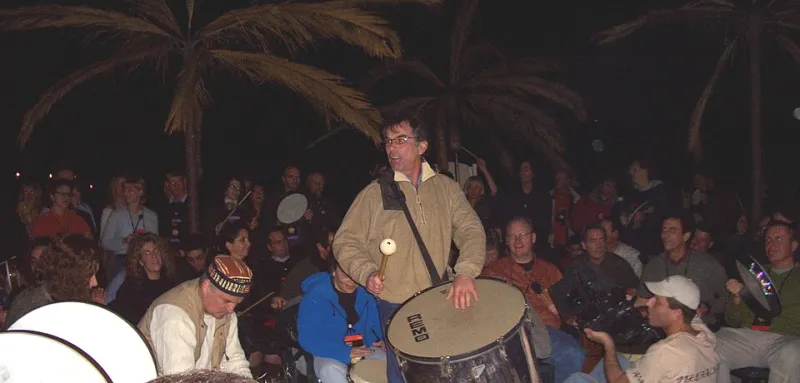
Photo: Shixart1985, CC BY 2.0, via Wikimedia Commons
Most American festival advice is about endurance. Hydrate, pace yourself, wear the right shoes, and—implicitly—push through. Wakati Wetu 2026 is built on a different idea: rest is part of the rhythm, not a break from it. That’s why one of the festival’s most carefully planned spaces has no lineup, no speakers, and no reason to clap. It’s a patch of quiet grass, and it might be the most radical stage on the grounds.
Why a Festival Built on Drums Needs a Place to Stop
Wakati Wetu means ‘our time’—and the festival earns that name by making room for every kind of time, including the slow kind. The main stages run on djembe, kora, amapiano, highlife, and late-night DJ sets. The community slot invites anyone to join. The food stalls map diaspora memory onto paper plates. But a festival built around drums, dance, and late-night energy also has to account for the bodies doing the dancing. That means naps. Nursing. Sensory breaks. Blood sugar dips. First-timers who feel the bass in their teeth and suddenly need to sit down.
In the U.S., we tend to treat rest as something to apologize for. ‘I’m just taking a quick break,’ we say, as if exhaustion were a character flaw. Wakati Wetu’s quiet lawn flips that script. It doesn’t ask why you’re there. It assumes you have a body, and bodies need maintenance.
What the Quiet Lawn Actually Looks Like
Picture a lawn at the edge of the grounds, close enough to hear the distant hum of the festival but far enough that you can hear your own breathing. There’s shade—trees if the site has them, shade sails if it doesn’t—and a ground cover that’s soft enough for a blanket but firm enough for a wheelchair. A low fence or a ring of potted palms marks the boundary, not to keep people out but to signal a change in volume. Inside, there are no amplified speakers and no food vendors. There is a water station, a cubby wall for shoes and bags, and a small shelf of calm kits: earplugs, sunscreen, tissues, a few fidget toys, and a laminated card that says ‘You’re allowed to be here.’
Two rest hosts staff the lawn during all open hours. They wear teal vests—visible but not hovering. They’re not medics, but they’re trained in first aid, sensory support, and lactation-friendly practices, and they can radio the festival’s care team if something needs more than a quiet minute. They also enforce the only real rule: keep the volume down.
Signage at the entrance shows three icons—a sleeping person, a nursing parent, a pair of noise-canceling headphones—and one sentence: ‘Quiet is the point.’ A painted line on the grass marks the sound boundary. Phones are allowed, but calls are not. If you need to take a call, step outside the line.
The Etiquette Is Simple, but It Isn’t Optional
- Whisper or don’t talk. If you can hear your own voice over the distant bass, you’re probably too loud.
- Headphones are fine; leaking headphones are not. If your neighbor can hear your playlist, turn it down or take it outside the line.
- Don’t photograph people sleeping, nursing, or crying. Actually, don’t photograph anyone without asking. The lawn is not a content opportunity.
- Share the shade. A blanket is not a land claim. If someone looks like they need a corner, make a corner.
- Flag a host if someone seems unwell. Don’t crowdsource a diagnosis or gather a circle. The hosts know the protocol.
- Walk around, not through. The lawn is not a shortcut to the main stage. If you’re cutting through with a group and a speaker, you’re in the wrong place.
- Leave no trace. Take your water bottle, your snack wrapper, and your emotional baggage with you. (Kidding about the last one. Mostly.)
This is not a nap pod at a tech conference. There’s no app, no reservation, no upcharge. It’s a lawn.
How to Use It Without Making It a Whole Thing
Here’s the thing about rest at a festival: the earlier you take it, the less dramatic it is. The quiet lawn is not an emergency room. It’s a reset button. If you wait until you’re dizzy or crying or both, you’ll still be welcome—but you’ll have a harder time enjoying the rest of the night. So treat the lawn like a scheduled set. Maybe that’s twenty minutes after the afternoon drum circle. Maybe it’s a full hour before the headliner. Maybe it’s five minutes because the crowd got too loud and your nervous system tapped out.
For nursing parents, the lawn has a shaded corner with seats and a sign that says ‘No cover required. No comments.’ For anyone in sensory overload, the calm kits are free to use and don’t need to be returned. For first-timers who feel like they’re the only person at Wakati Wetu who isn’t having a perfect time: you’re not. The lawn is full of people taking a minute. That’s the point.
One practical note for U.S. festivalgoers: you don’t need to explain yourself to the hosts. You don’t need to say ‘I’m just resting’ or ‘I’m sorry, I just need a second.’ The hosts will nod and point you toward the water. The lawn doesn’t require a reason. It requires quiet.
Why This Is the Stage That Makes the Rest Possible
Wakati Wetu’s tagline is ‘our time, our sound.’ The quiet lawn is where the festival proves that ‘our time’ includes the time you spend doing nothing. It’s where elders can sit without being jostled. Where parents can feed a baby without finding a bathroom. Where neurodivergent festivalgoers can take off their headphones and still feel like they belong. Where a first-timer can cry for a minute and then go back out.
A stage with no sound is still a stage. It’s just performing a different kind of care. The quiet lawn doesn’t have a lineup, an encore, or a merch table. It has grass, shade, and permission. In a festival culture that often mistakes exhaustion for devotion, that might be the most radical thing on the grounds.