Twelve Burners, Two Soundchecks: Inside the Tent That Feeds Wakati Wetu
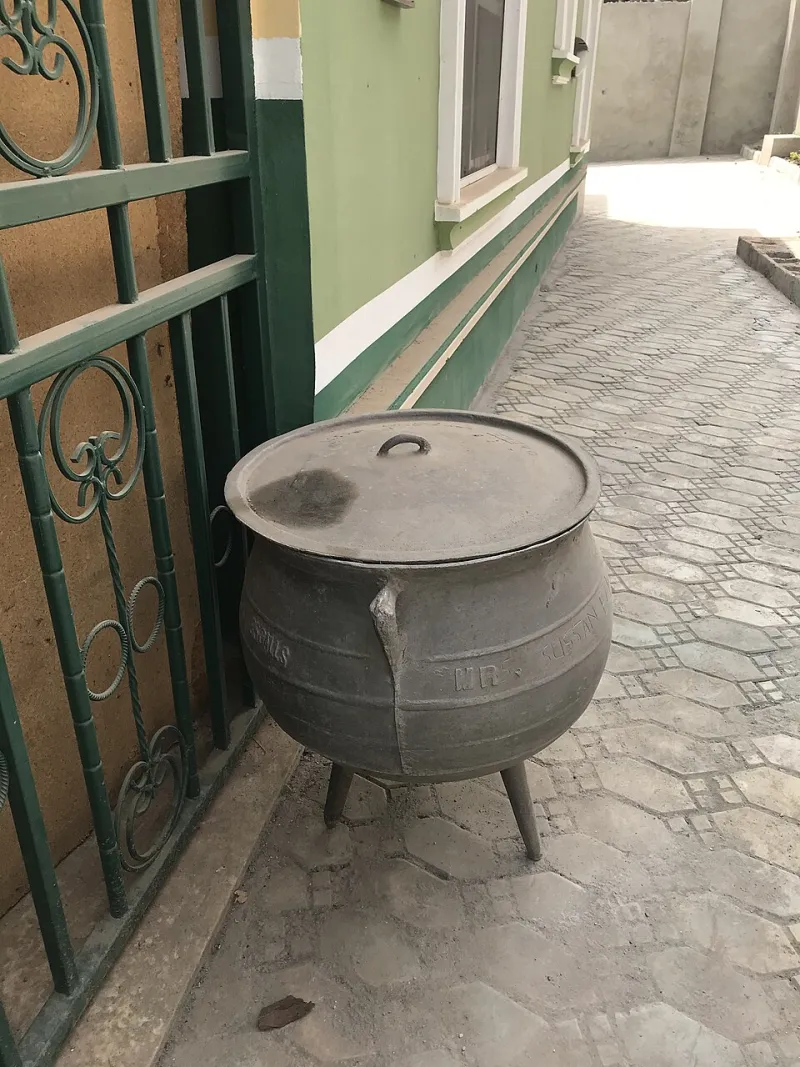
Photo: Kid Keen 47, CC BY-SA 4.0, via Wikimedia Commons
The public stalls get the photos. Smoke, color, a line of people holding paper boats of something excellent. But walk past the last of them, follow the cable ramps around the back of the second stage, and you hit a different kind of cooking: a long white tent with twelve burners, two stock pots the size of laundry baskets, and a whiteboard that lists not menu items but shift times.
This is the crew kitchen. It feeds volunteers, artists, technicians, medics, interpreters, drivers, and the small army of people who arrive before the gates open and leave after the last folding chair is stacked. Nobody buys a ticket to eat here. That's sort of the point.
4:15 A.M., Before the Generators Wake Up
The kitchen lead — call her Auntie Ngozi, which is what everyone calls her anyway — starts with water on. By the time the site's generators cough to life at five, onions are already going translucent in oil and the whiteboard has been updated with a number nobody enjoys: the headcount.
On a full day that's a little over 900 meals, spread across four services. Breakfast for the overnight security handover. A midday shift meal. A pre-showtime plate for anyone who won't be free again until close. And the late plate, served after load-out, when tired people eat standing up and say very little.
"You don't cook for a festival the way you cook for a party," Ngozi says, stirring something that has been going for an hour and needs to go for two more. "A party, you cook for the moment people arrive. Here, you cook for the moment they run out of energy."
Why Stew Scales and Salads Don't
The kitchen's logic is unforgiving and deeply practical. Anything that wilts, browns, or needs to be assembled to order is a liability when 200 people arrive inside a ten-minute window.
So the menu leans on what holds: jollof and a plain rice next to it, because there's always someone who wants the plain one. A slow beef stew and a chickpea one side by side, so the vegetarian option isn't an apology. Moin moin steamed in trays. Chapati made in batches and kept warm under cloth. Sukuma wiki cooked down hard. Red red with enough plantain that the fryer becomes its own station. A pot of something plain and mild that a nine-year-old volunteer will actually eat at 4 p.m. in the sun.
"Every dish has to survive twenty minutes on a warm line," says the sous, a culinary student from Atlanta on her third Wakati Wetu. "That rule kills about half the ideas I bring. It's a good rule."
The Plate Nobody Ordered
On the wall near the coffee urn hangs a clipboard with names and codes on it — allergies, halal, no pork, no gluten, one crew member who cannot be near shellfish. It's checked twice per service. There's a separate shelf for those plates, labeled in marker.
Then there's the no-show plate. Every service, the kitchen holds back a handful of portions for people who were supposed to rotate out and didn't — a stage manager stuck on a radio call, a medic mid-incident, a driver whose shuttle ran late. The food goes in the warmer, gets labeled with a time, and sits.
"Nobody in this tent has to choose between eating and doing their job," Ngozi says. "That's it. That's the whole policy."
Feeding the Schedule, Not the Clock
What makes the kitchen a production department rather than a catering operation is that its clock is borrowed from the stage. Meal windows shift the moment soundcheck moves. When the second stage's changeover ran long on the first night of 2026, the midday plate slid forty minutes and the late plate slid with it — and the kitchen sent runners out with foil trays rather than watching a lighting crew walk off hungry.
The whiteboard is rewritten at least three times a day. It has a column for weather. It has a column for how many people are expected to be added to the roster by evening.
What the Kitchen Asks of the Festival
It doesn't ask for much, but it asks early: a power drop that isn't shared with the monitor desk, water that isn't a garden hose, shade that actually covers the prep table, and a real refrigerator instead of a truck cab with the AC on. It asks for volunteer rotations that don't start someone's shift at the same moment as a serving window. It asks for a walk-in that's cold enough, because the difference between cold enough and almost cold enough is a medical tent full of people.
Mostly, though, it asks to be in the plan from the beginning rather than added to it in June. A kitchen squeezed into the last available footprint will still feed everyone. It will just do it with a line out the side and a lot more apologizing.
The Plate as Infrastructure
There's a version of festival coverage where food is the fun section — the part you skim on the way to the lineup. Standing in this tent for a shift makes that version look backwards. A crew that eats on time is a crew that runs on time. A volunteer who gets a hot meal and a chair for fifteen minutes is a volunteer who comes back next year. An artist who isn't handed a sad sandwich at 9:40 p.m. plays a better set.
At 1:20 a.m., the last of the load-out crew comes through the flap. The pots are scraped, the warmer is down to three plates, and someone has put on a radio station from home, low. Nobody is talking about the show. They're talking about whether there's more of the stew.
There is. There always is. That's the whole design.