Read the Queue: How Wakati Wetu’s Food Stalls Map Diaspora Memory
At Wakati Wetu 2026, the longest line might be for jollof rice, but nobody in it is only hungry. The queue is where the festival does some of its most patient work: a vendor explains why the plantains are cut a certain way, a stranger from Houston mentions her grandmother’s spice ratio, and a teenager from Minneapolis hears a language she has only seen on menus. The food line is not a concession. It is a program.
The Queue Is a Living Archive
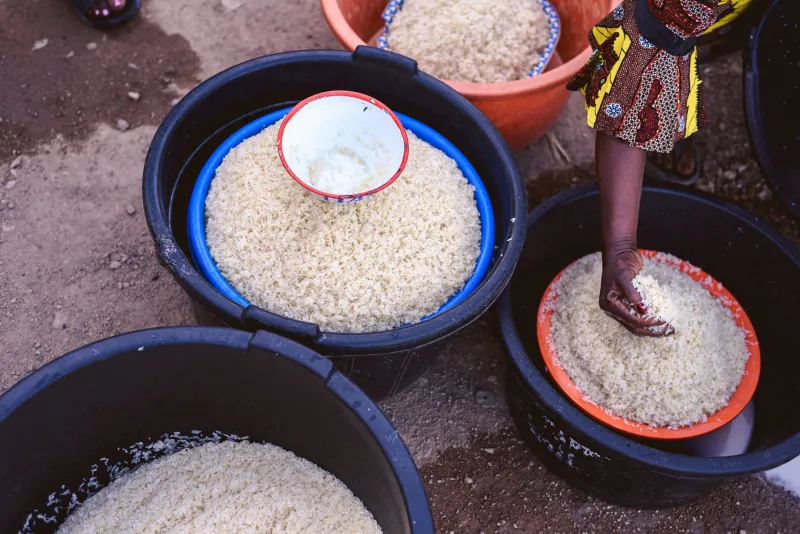
Festival food stalls are usually described in practical terms — calories, cash flow, trash. At Wakati Wetu, they function more like an archive with a serving spoon. The vendor from Accra does not just hand over a plate; she hands over a method. The auntie from Lagos does not just sell pepper sauce; she corrects your pronunciation of the dish and then asks where your people are from. The line slows down because people are not only ordering. They are remembering out loud.
For U.S. readers, this is familiar in a different key. Think of the line at a church fish fry in Atlanta, a tamale stand in San Antonio, a halal cart in Brooklyn. The food is the draw, but the line is where the community teaches itself. Wakati Wetu’s food area works the same way, except the syllabus includes suya, injera, attiéké, fufu, and enough regional arguments to fill a seminar.
Rivalries Are the Point
Yes, the jollof debate will happen. Ghana versus Nigeria is a festival tradition at this point, and the argument is not a distraction from the food. It is the food’s social life. The same goes for fufu versus banku, for the right consistency of egusi, for whether a particular stew needs more smoke or more heat. These rivalries are not petty. They are intimate. They tell you who grew up where, who married into which family, and which recipe survived a move across an ocean.
A good festival queue lets that banter breathe. It does not rush the vendor into a script. It gives people enough time to say, 'My mother does it differently,' and enough room for the vendor to answer, 'Bring her next year.' That exchange is the point. It is also a map: every regional disagreement is a route back to a specific place, a specific household, a specific memory.
What to Listen for Between Orders
Stand in line for ten minutes and you will hear instructions that are really inheritances. 'Do not drown it in sauce.' 'Eat it with your hands.' 'Let the attiéké cool before you mix it.' These are not random service notes. They are small transmissions of technique and care. The vendor is not only feeding you. They are teaching you how the dish is supposed to feel.
So ask a real question, not a quiz. 'What does your family do differently?' works better than 'Is this authentic?' The first invites a story. The second asks someone to perform an identity on demand. At Wakati Wetu, the vendors are culture bearers, not a search engine for cuisine. Treat the line as a conversation with a host, and it will usually open into one.
Read the Line Like a Map
Look closely at who is standing where. The line for one stall may be full of Houstonians from a particular Nigerian community. Another may draw the DC crowd that knows the Ethiopian corridor along 9th Street. Another may pull Minneapolis folks who have strong opinions about Somali restaurants back home. Los Angeles brings its own Ghanaian and Cameroonian networks. Atlanta shows up with a pan-African confidence and a deep bench of spots to argue about later.
The festival food map is not just a list of countries. It is a set of migration routes, neighborhood histories, and family supply chains. The queue is an atlas you can stand in. And once you learn to read it, you can keep reading it after the festival ends.
Take the Line Home
You do not need a plane ticket to continue the exchange. You need a little follow-through.
First, ask vendors where they eat on their day off. Write it down. That recommendation is worth more than a listicle because it comes with a face and a story.
Second, visit African grocers in your city with a specific question. Ask for the spice blend a vendor mentioned. Ask which brand of stockfish or dried shrimp they trust. Buy small, cook once, and let the mistake teach you something.
Third, order the dish you did not recognize. Ask how it is eaten, not just what is in it. The how is where the culture lives.
Fourth, go to the restaurant on a Tuesday, not only during festival weekend. Tip well. Do not ask the staff to perform authenticity for you. Pay full price for the knowledge you are receiving.
Fifth, cook one recipe and invite someone from a different region to correct you. That correction is not an insult. It is the same thing that happened in line at Wakati Wetu, just with fewer folding tables.
The Program After the Program
The festival will end. The line will disperse. The plates will stack up. But the queue is the program because it rehearses a way of being together: curious, specific, a little hungry, and willing to let someone else lead the story for a minute. Take that home to your city’s African restaurants and grocers. The line does not have to break just because the music stops.