The Hits Travel Faster Than the Languages Do: A Diaspora Argument About Curation
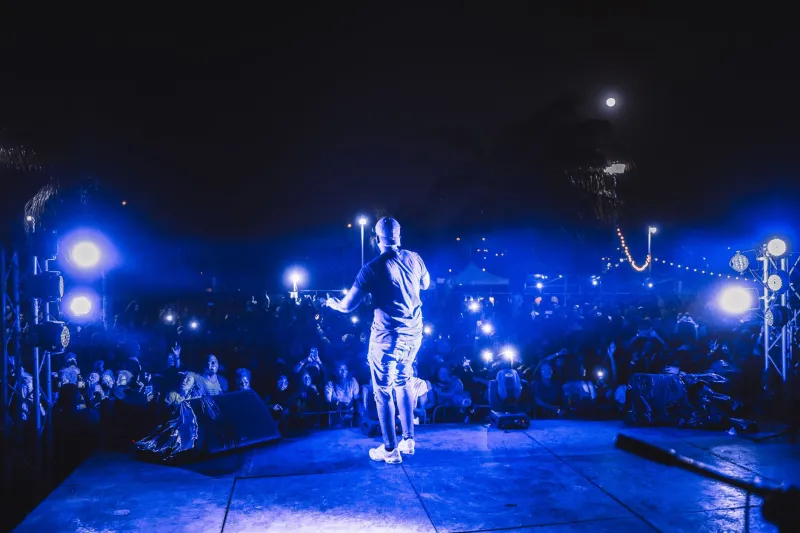
On the second night of Wakati Wetu this year, something like eight thousand people sang a Yoruba hook back at the stage phonetically, without understanding a word of it. It was a genuinely great moment. It was also the exact moment a debate that has been simmering in group chats from Brooklyn to Houston spilled onto the lawn: if most of us can’t translate the songs we scream loudest, who exactly is this festival for?
The Argument Starts in the Ticket Line
“I’m here for the songs I already know,” said Adaeze Okafor, a nurse from Houston who had driven twelve hours with three friends. “I work nights. I’m not going to spend my one weekend off being educated. I want to dance.”
Two rows back, Tunde Ajayi, a curator who runs a small listening series in Oakland, saw it differently. “That’s fine as a want,” he said. “But if a festival only ever gives people what they already stream, it’s a jukebox with a wristband. The whole reason to gather is to hear something you couldn’t have found on your own.”
Neither of them is wrong, which is why this keeps coming up.
What the Algorithm Already Decided
American festival economics are unforgiving. Promoters need names that move tickets, and right now the names that move tickets are Afrobeats and amapiano. That reality shapes every lineup, including Wakati Wetu’s, and pretending otherwise is a good way to not have a festival next year.
But curation is what happens in the gap between what sells and what exists. Behind the scenes this year, programmers described a version of cross-subsidy that most festivals keep quiet about: the headliners pay for the small stage. The 9 p.m. main-stage set funds the 2 p.m. slot where a Dar es Salaam singeli artist plays to four hundred people and a lot of empty grass.
“We book the hits so we can afford the deep cuts,” one programmer told me, on condition of not being named while negotiations were still open. “If we announced only the deep cuts, we’d be a conference.”
Language Is a Gate, and Sometimes a Door
For a lot of diaspora fans, the language question is not abstract. Growing up with a parent’s language in the kitchen and English everywhere else leaves people with a specific ache — the sense of being one step removed from something that is supposedly theirs.
Naledi Mokoena, who grew up in Atlanta and now books shows in Chicago, put it plainly. “I understand maybe sixty percent of a Zulu lyric on a good day,” she said. “I used to feel like a fraud about it. Then I realized nobody expects an opera audience to speak Italian.”
Others push back on that comparison. Faisal Mwinyi, a taarab singer from Zanzibar who played the smaller stage this year, said he has been asked more than once overseas to shorten his set and “maybe do something in English.” He laughed, but not warmly. “They want the feeling of Africa without the inconvenience of it,” he said. “The language is not decoration. It is the song.”
That tension — translatability as access versus translatability as dilution — is where most of the real arguments live.
“Authentic” Is a Moving Target
A word that showed up in nearly every conversation I had this weekend was “authentic,” usually attached to a complaint about someone else’s taste. The irony is thick, because the music people hold up as pure is almost never that.
Amapiano owes a debt to kwaito and deep house. Afrobeats grew up on dancehall, hip-hop, and church choirs. Congolese rumba went to Havana and came back changed. The diaspora has spent a century remixing the continent, and the continent has spent a century remixing it right back.
Diaspora artists catch it from both directions. Spend an hour in the artist tent and you will hear someone who grew up in Maryland being told they are not African enough for one stage and too African for another. Their audience, meanwhile — the kids of immigrants, the cousins who visit every other summer, the spouses who married in — is arguably the most loyal crowd on the grounds.
“Authenticity is a marketing department,” said one Lagos-based manager who was shepherding three acts through the weekend. “On the ground we just call it a sound.”
Who Gets to Decide
Here is the uncomfortable part: curation is a political act whether programmers admit it or not. Every slot is an argument about whose music counts, whose language gets amplified, and which regions become a vibe rather than a place.
That does not mean every festival owes anyone a syllabus. It does mean the choices deserve daylight. Some of the more promising ideas I heard this year were unglamorous: publish the reasoning behind lineup decisions, pair each main-stage act with a smaller-stage artist on the same bill, run listening sessions in diaspora cities before the program is locked, and put language context in the program instead of leaving it as a barrier.
And audiences have a part that no curator can do for them. Show up at 2 p.m. The grass is emptier and the sound is just as good. The artists on the small stage are playing for the same festival you bought a ticket to, and they can see exactly how many people decided they were worth the walk.
The Question Behind the Question
“Who is African music for?” sounds like a question about taste. It is really a question about power — who programs, who promotes, who gets paid, and who gets to be surprised.
Wakati Wetu was built as a community gathering first and a concert second, and that framing is the only thing that makes this argument productive instead of exhausting. A festival that only serves demand becomes a playlist with a lawn. One that ignores demand does not survive to argue about it next year.
The messy middle — hits and deep cuts, languages nobody in the crowd speaks, a hall full of people singing along anyway — is not a compromise. It is the actual work. And it is the reason a lot of us keep showing up.