The Open Stage Isn't a Warm-Up: What Wakati Wetu's Community Slot Actually Does
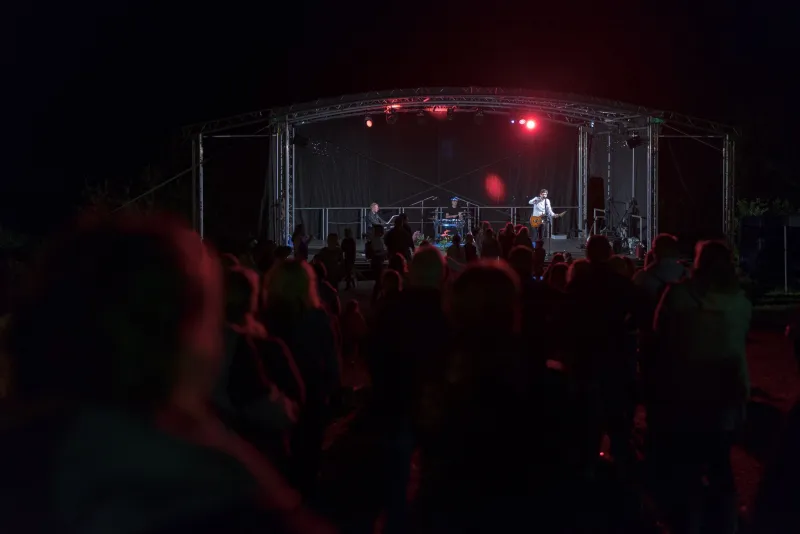
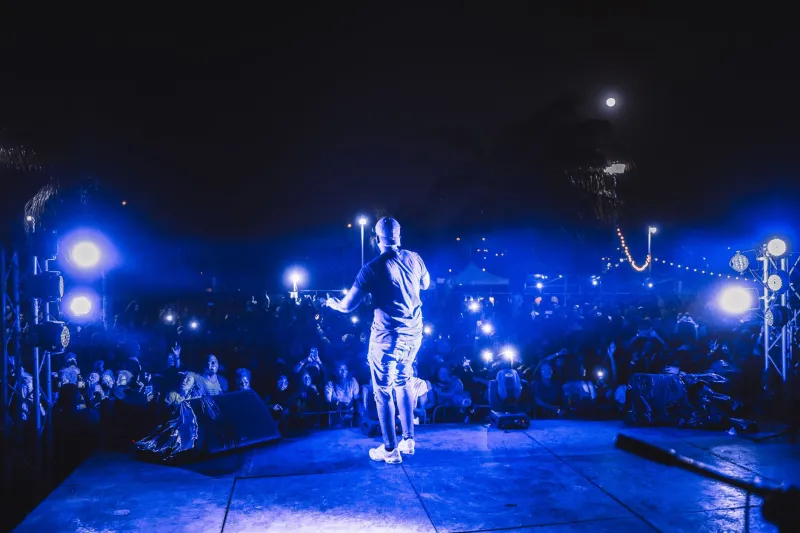
The first thing you notice about the community slot at Wakati Wetu is where it sits on the schedule. Not prime time, not the main stage — a smaller platform, an early-afternoon window, a crowd that's still deciding whether to commit. The second thing you notice is how many people are standing there anyway.
That's the tension worth pulling apart. The open stage is the festival's most mission-forward piece of programming and, by almost any industry measure, its least resourced. Both of those things are true at once, and pretending otherwise is how community slots quietly become decoration.
Twelve Minutes and a Google Form
The process is deliberately unglamorous. Applications open months out and are reviewed by a small committee — festival staff plus two community curators, one based in the US and one based on the continent. No paid submission fee, no requirement of a label or a manager or a TikTok following.
The bar is not "are you good" in the abstract. It's "does this work hold up in a twelve-minute set, outdoors, in front of people who did not come to see you." That's a different question, and it eliminates a lot of excellent bedroom recordings. The committee weighs four things: original material, live readiness, a clear sense of what the artist is building toward, and whether the set adds something to a lineup that already leans heavily on established names.
Roughly one in nine applicants gets a slot. Accepted acts get a fee — modest, but a real one, not a drink ticket — a proper soundcheck block, a professional multi-camera recording of their set, and an introduction to at least one booker or curator outside the festival.
Three Acts, Three Trajectories
The acts that come through this slot tend to fall into recognizable types.
There's the technically trained newcomer. A Guinean-American kora player in her early twenties, raised in Columbus, Ohio, splitting her time between classical training and a band that plays basement shows. Her set is tight and slightly stiff; the recording does more for her than the live show did.
There's the scene veteran with no infrastructure. A DC go-go percussionist in his forties who has played weddings and church halls for two decades and has never had a professional live video. He walks off with four hundred new followers and, more usefully, a booking contact in Chicago.
And there's the hybrid act — the Afrobeat-soul singer from Minneapolis whose SoundCloud numbers are respectable, whose live band is under-rehearsed, and who treats the twelve minutes as an audition for a festival circuit she hasn't cracked yet. She's the one the slot was arguably designed for, and she's also the one most likely to be disappointed by what happens next.
The Tokenism Question
Here's where the opinion part starts.
A festival can absolutely be both a showcase and a launchpad. What it can't be is both while treating the community slot as a box to check. The tells are consistent: an unlisted time slot, no press access, no recording, a fee that's a fraction of what the main-stage acts get, and an artist who is invited to perform but not to stay for the industry conversations happening backstage.
Wakati Wetu has, to its credit, avoided most of those. There's a fee, there's footage, there are introductions. What it hasn't solved — and what almost nobody in the world-music circuit has solved — is the gap between a strong twelve minutes and a career. A festival can hand you a recording. It can't hand you a booking agent who returns calls in February.
There's a second, subtler risk. When a festival frames its community programming as "the future of the music," it can slide into flattening: the acts get selected as representatives of a scene rather than as artists with specific, weird, individual sounds. The kora player is not the future of anything. She's a musician with a set to tighten. Treating her as a symbol is a different kind of disrespect than ignoring her.
What a Launchpad Actually Requires
The unglamorous answer is infrastructure, not stage time. Three things move the needle more than an extra slot on the bill.
First, delivery. Footage that arrives in April is worthless. Artists need the recording within two weeks, edited to a shareable length, with audio they'd actually put on a press kit.
Second, warm introductions, and not a group email. A curator's text message to a booker at a US venue in the same genre is worth more than any festival slot. That's not scalable, and it doesn't need to be — twenty real introductions beats two hundred business cards.
Third, a fair shot at the next tier. If an act crushes the community stage this year, the honest follow-up isn't another twelve-minute slot. It's a supporting slot on the main program the following edition, with the fee and the soundcheck that implies.
What to Watch For
For US audiences, the practical takeaway is simple: go early on the day you're most hungover, and plant yourself in front of the community stage for an hour. The sets are short, the stakes are visible, and you'll see someone before the rest of the country does.
For the festival, the ask isn't more programming. It's follow-through. The open stage works when it functions as a pipeline with a memory — when the people running it can name, two years later, exactly which booker they sent which artist to, and what came of it.
That's a harder thing to put in a program than a stage name. It's also the only version of this slot that deserves the word launchpad.