Eyes on the Drum: How Wakati Wetu's ASL Team Builds a Visual Setlist
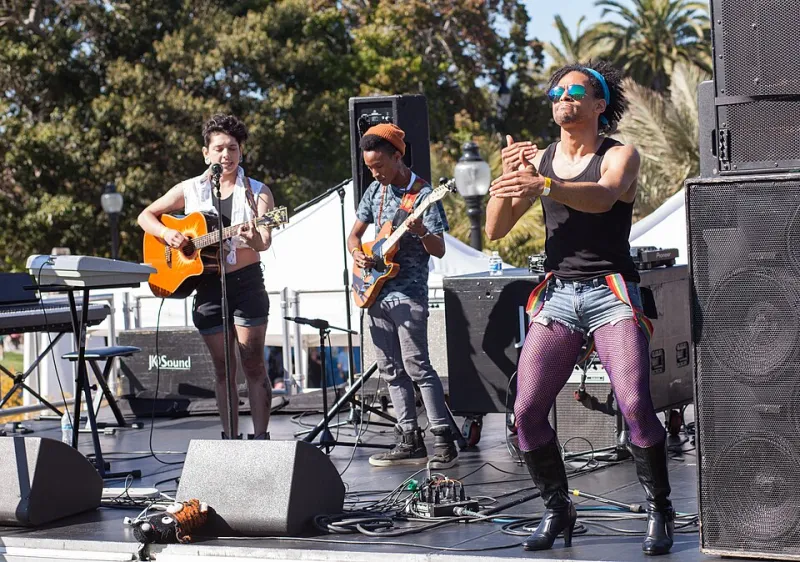
Photo: Pax Ahimsa Gethen, CC BY-SA 4.0, via Wikimedia Commons
The most crowded room at Wakati Wetu on a Friday morning is not the main stage. It is a folding-table setup behind the production trailer, where two ASL interpreters, a Deaf consultant, and a stage manager are staring at a laptop, listening to a scratch track of a Ghanaian highlife song that will not be performed for another thirty hours.
They are not arguing about lyrics. They are arguing about the hi-hat.
"That little offbeat chatter," says one interpreter, tapping the table. "If I sign the words over it, I lose the bounce. If I sign the bounce, I lose the words. We need a split."
This is the work that rarely makes the festival program: the quiet, granular labor of turning sound into a visual language that can carry rhythm, tone, and crowd participation. At Wakati Wetu, ASL interpretation is not a service bolted onto the side of the schedule. It is part of the festival's community promise, and the team treats it that way.
Before the First Soundcheck
The crew starts with the setlist, but the setlist is only a skeleton. Artists working in Twi, Yoruba, isiZulu, Wolof, French, Portuguese, and English may code-switch mid-song. Choruses repeat. A drummer stretches a break for two extra minutes because the crowd is moving. An emcee goes off-script to tell a story about the neighborhood where the song was written.
The ASL team builds what they call a visual setlist: a working document that flags where the lyric is the spine of the moment and where the rhythm takes over. They mark entrances, instrumental breaks, call-and-response hooks, and the places where an artist is likely to point the microphone at the audience.
"American Sign Language is not English on the hands," says a Deaf consultant who works with the crew. "It has its own grammar, its own timing, its own use of space. If you interpret a song word for word, you can miss the point of the song. You can also miss the fun."
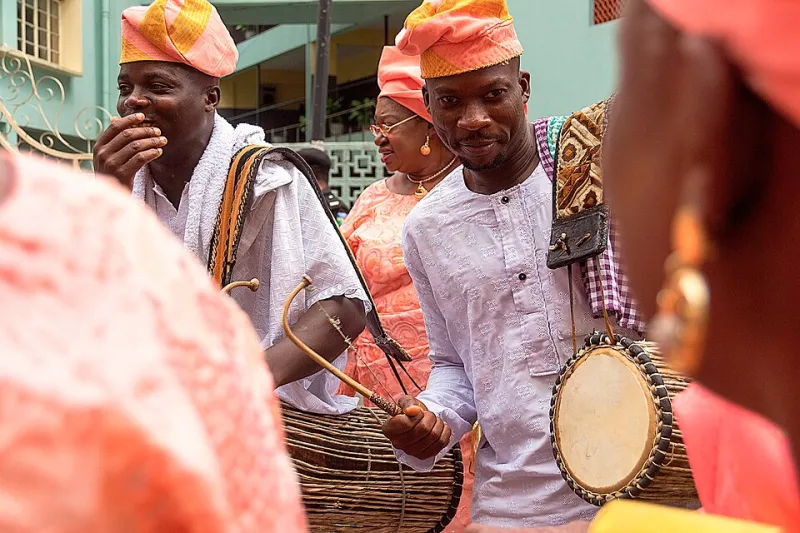
For a percussion-heavy set, that means the interpreters may use their body to show a djembe pattern before they show the lyric. For a slower ballad, it may mean holding a sign longer, letting the image land. For a call-and-response chorus, it may mean turning toward the crowd and inviting them in, not just translating what the artist said.
A Vocabulary for the Low End
Rhythm is the hardest thing to translate, because rhythm is not a word. It is a felt pattern. The team spends hours in advance listening for the low end: the kick pattern, the bass line, the clap that lands slightly behind the beat.
One interpreter describes building a small library of gestures for different grooves. A steady four-on-the-floor pulse might get a clean, repeated hand movement. A polyrhythmic passage might get a layered motion that shows two things happening at once. A sudden stop might get a freeze, a held breath, a visual silence.
They also watch the artists in rehearsal. A singer who leans back before a high note. A guitarist who steps forward for a solo. A dancer who cues the crowd with a raised hand. These are not lyrics, but they are part of the performance, and the team wants Deaf attendees to have access to the whole thing, not just the words.
"People think accessibility is about captions," says the stage manager, who has worked with the festival since its early years. "Captions help. But a concert is a room full of people reacting to each other. If you only caption the lyrics, you miss the room."
Call-and-Response Is a Two-Way Street
Wakati Wetu's programming leans on traditions where the audience is not passive. A chorus is meant to be returned. A clap pattern is meant to be picked up. An artist might ask the crowd to sing a line back, or hold a note while the drums circle underneath.
For the ASL team, those moments require a different kind of preparation. They need to know which phrases the artist will teach the crowd, how many times the crowd will repeat them, and whether the artist will change the wording on the fly. They also need to be visible. A sign that works in a quiet room does not always read from forty feet back in a crowd that is dancing.
The crew rehearses sightlines. They check where the interpreter will stand so that Deaf attendees can see hands, face, and body without staring into a stage light. They coordinate with lighting to avoid putting the interpreter in silhouette. They talk with artists about pacing: can you give the crowd a second to learn the line? Can you repeat the chorus one more time?
None of this is glamorous. Most of it happens before the gates open, in hotel lobbies and backstage corners, with a phone propped against a coffee cup and a setlist covered in handwritten notes.
The Crowd Is Part of the Set
The team also listens to Deaf attendees. Feedback from past years has shaped how Wakati Wetu runs its accessibility table, where people can ask questions, pick up a schedule with ASL interpretation times, and flag a set that needs coverage. The festival has moved away from treating interpretation as a single stage-side gesture and toward a wider presence: roving interpreters for community conversations, ASL-friendly signage, and advance information about which performances will have full visual interpretation.
That wider presence matters because Wakati Wetu is not only a concert. It is a gathering with workshops, food stalls, late-night conversations, and the unplanned encounters that happen between sets. If accessibility stops at the stage, it misses the festival.
"The goal is not to check a box," says one interpreter, packing up a binder of setlists. "The goal is that a Deaf attendee can come with friends, stay for the whole night, and leave talking about the same moments everyone else is talking about. The drum break. The chorus. The way the crowd lost it when the bass came in."
Accessibility Is a Promise, Not a Patch
Wakati Wetu's 2026 program will include ASL interpretation across multiple stages and community spaces, with advance schedules posted closer to the festival weekend. But the work behind those listings is already underway: the late-night lyric checks, the rhythm mapping, the conversations with artists about how to leave room for the crowd.
It is easy to call this an accessibility feature. The crew calls it something closer to hospitality. You do not invite people into a room and then describe the music from the doorway. You make sure they can see the beat, feel the pause, and join the chorus.
That is the visual setlist. Not a translation of the lyrics, but an invitation to the whole set.