The Bin After the Bass: Inside Wakati Wetu’s Lost-and-Found Table

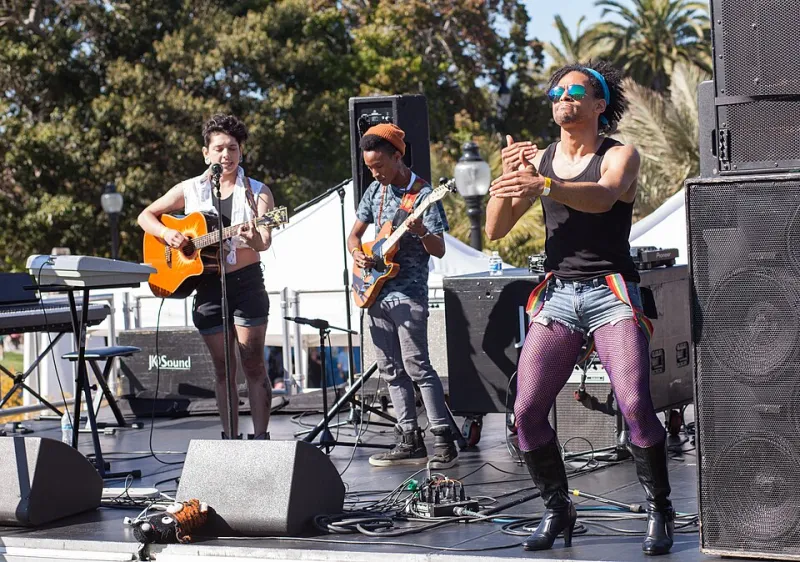
Photo: Frank Schwichtenberg, CC BY-SA 4.0, via Wikimedia Commons
On Sunday night at Wakati Wetu 2026, the lost-and-found table looks less like a lost-and-found and more like a small, improvised museum of diaspora life. The main stage has gone quiet, the food stalls are breaking down, and a handful of volunteers in folding chairs are sorting through plastic bins under a work light. One bin holds single earrings. Another holds children’s shoes. A third holds power banks, prayer mats, and a foil-wrapped bag of snacks that someone packed for the ride home and then forgot.
The table sits near the information tent, just inside the main gate — close enough that people pass it on the way in, far enough that it does not feel like a customer-service counter. It is staffed from 10 a.m. to 10 p.m. on festival days, and until 6 p.m. on the Monday after. The volunteers wear plain lanyards. They have a binder, a roll of masking tape, and a labeling system that starts out neat and ends up looking like a group project the night before it is due.
A Table With Better Stories Than Most Panels
Most festival lost-and-found desks are a box of sad gloves and a phone charger. Wakati Wetu’s is different because the crowd is different. People arrive carrying layers: a change of clothes for the evening, a prayer mat for the afternoon, snacks for children who will get hungry between sets, a power bank because the group chat will not charge itself. When those layers come off, the table collects them.
“We get a lot of single earrings,” says one volunteer, holding up a gold hoop that was found near the bass speaker. The tag reads: “Very confident earring. Found after the 4 p.m. set. No match yet.”
There are also children’s shoes — small sandals, mostly, the kind that come off when a kid is carried across the grounds — and at least three identical black cardigans. One prayer mat was rolled tightly and left near the shade tent. A power bank arrived with a sticker that read, in careful block letters, “DO NOT LET AUNTIE BORROW THIS.”
The Tagging System Is the Whole Magic
The volunteers do not just toss things into bins. Every item gets a tag with the date, the time, and the place it was found. Bins are sorted by category: accessories, clothing, kids, electronics, prayer and ritual items, and food. The food bin is the smallest and the most gently policed. “If it is wrapped and it looks like it was meant for a journey, we keep it until the end of the night,” one volunteer explains. “Then we ask around. Usually someone’s auntie knows.”
Claiming an item is straightforward but specific. You describe it. You name the place you think you lost it. If it is valuable — a phone, a wallet, a passport — you show ID and the volunteer logs the return. For children’s items, the desk asks a parent or guardian to confirm the description before handing anything over. There is no photo wall, no public display, and no performance of gratitude. The desk is designed to be quiet.
What People Carry (and What They Set Down)
The table tells a story about what a community brings to a festival, and what it trusts the festival to hold. A single earring usually means someone changed outfits in a hurry, or danced harder than the clasp could handle. A child’s shoe usually means a parent carried a tired kid through the crowd. A prayer mat means someone found a corner for a few minutes of quiet and then moved on. The snacks are the most tender: small bags of chin chin, foil-wrapped puff-puff, a plastic container of jollof that someone packed for the drive home and then left under a chair.
“People leave things because they are having a good time,” says another volunteer. “They are not being careless. They are being present. Our job is to make sure the present does not cost them too much.”
The Comedy of Errors, Sorted by Color
There are funny stories, because there always are. A pair of toddler sandals was matched to the wrong child twice before a grandmother settled the matter with a single look. A black cardigan was claimed by three different people, all of whom described it accurately, because it was a black cardigan. A power bank sat unclaimed for two days until a teenager walked up and said, “It has a crack in the corner and it only charges if you hold it weird.” It did. It was hers.
One volunteer keeps a list of the strangest descriptions offered at the desk. So far it includes: “a bag that smells like my grandmother’s kitchen,” “a left shoe with a very specific scuff,” and “my dignity, possibly near the drum circle.”
The 30-Day Shelf and the Things We Owe Each Other
Unclaimed items stay in the festival office for 30 days. After that, clothing and accessories go to community partner organizations; electronics are wiped and recycled; food is discarded. Items with identification — a passport, a wallet, a phone — are handled separately and returned to local authorities if the owner cannot be reached. The volunteers do not enjoy this part. They would rather make a match.
By Monday afternoon, the table has shrunk to a few bins and a binder with more crossings-out than names. The gold hoop earring is still there. So is the power bank with the auntie warning, waiting for a teenager who knows how to hold it weird. The volunteers pack the bins into a car and drive them to the office, where the shelf will hold them for a month. It is not glamorous work. But it is the kind of work that makes a festival feel like a place where you can set something down — a bag, a shoe, a prayer mat — and trust that someone will help you pick it back up.